What area code is 303: 303 Area Code: Denver, Colorado, and the Overlays Explained
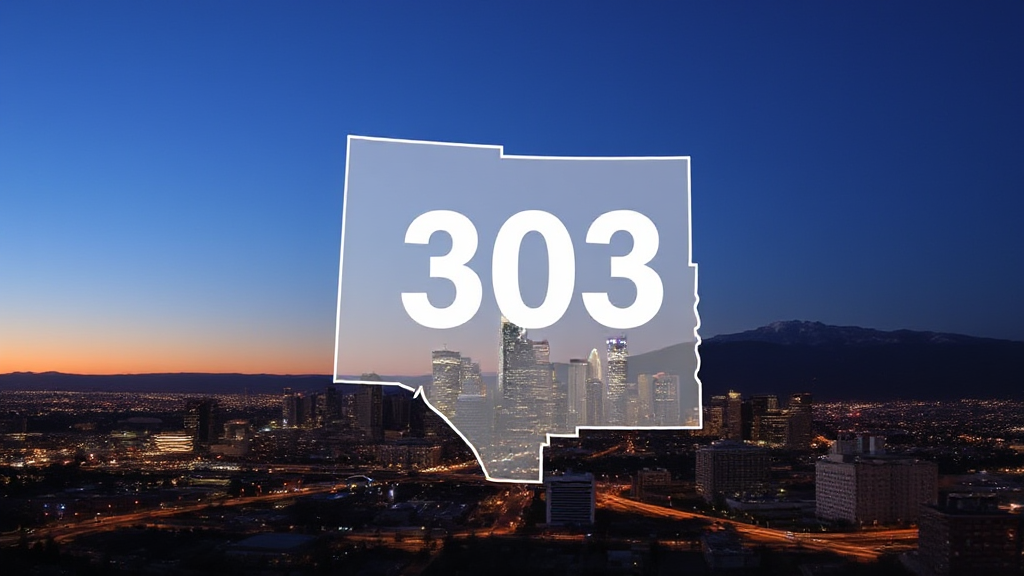
If you are asking what area code is 303, the short answer is Colorado. More specifically, 303 belongs to the Denver metro area, the state’s most populous region, and it has been tied to that part of the country for decades. But the fuller story is more interesting than a simple location label, because 303 no longer works the way it did when it was first introduced. Overlay codes have changed how people dial, how numbers are assigned, and how locals think about the code they grew up with.
Whether you spotted 303 on a missed call, are comparing neighborhoods before a move to Colorado, or just want to know which part of the state a number belongs to, the details below should give you a clear picture.
What Area Code 303 Covers and Which Cities Use It
Area code 303 serves Denver and much of the surrounding metro area. That includes the city and county of Denver itself, plus a long list of suburbs and neighboring communities that share the same numbering plan. If you have seen 303 on a business card, a landline, or a cell number tied to the Front Range, chances are good it came from somewhere in this cluster.
Some of the well-known cities and towns inside the 303 footprint include Aurora, Lakewood, Arvada, Westminster, Thornton, Centennial, Littleton, Englewood, Wheat Ridge, Broomfield, and Commerce City. Boulder also falls within 303, along with Golden, Brighton, Northglenn, and parts of the foothills west of Denver. The code stretches from the dense urban core out toward the plains on the eastern side of the metro and up into the mountain communities that sit close to the city.
That coverage is not accidental. Denver is the anchor, and the 303 region grew around it as the population expanded outward. The code is often described as the Denver metro code, but it is more accurate to say it covers the urban corridor that radiates from Denver in nearly every direction. If a number is 303, it is almost certainly tied to this part of Colorado rather than the western slope, the southern part of the state, or the eastern plains far from the city.
One practical detail people notice: 303 numbers are common on both mobile phones and traditional landlines. Because the code has been around so long, it carries a certain local familiarity. Longtime residents sometimes treat it as a marker of belonging, even though number portability means a 303 number does not guarantee someone currently lives in the metro.
The History of 303 as One of the Original Area Codes
303 is one of the original area codes in the North American Numbering Plan, which means it dates back to the era when area codes were first assigned across the United States and Canada. At that time, Colorado was given a single code to cover the entire state. There was no split, no overlay, and no need to dial extra digits for local calls. One code handled everything from Denver to Durango.
That worked for a long time. Colorado’s population was smaller, phone usage was lighter, and the numbering system had plenty of room. As Denver grew and more people needed phone numbers, the state eventually had to be divided. The first major change came when 719 was carved out to serve southern and southeastern Colorado, including Colorado Springs and Pueblo. Later, 970 was created for the western slope and northern Colorado, covering places like Fort Collins, Grand Junction, and Steamboat Springs.
After those splits, 303 was left with the Denver metro and the nearby communities that still use it today. The code became more concentrated, but it also became more heavily used. Denver kept growing, and the demand for new numbers kept rising. That pressure is what eventually led to the overlay codes that now share the same geographic space as 303.
It is worth noting that 303 has never been retired or reassigned to another state. It remains a Colorado code, and its identity is still closely tied to Denver. Even as new codes have been added, 303 has kept its place as the original and most recognizable number for the metro area.
Overlays 720 and 983: What They Mean for Dialing
Because 303 could not keep up with demand forever, Colorado added overlay codes. An overlay does not replace the original code. Instead, it adds a new code to the same geographic area. That means two different area codes can serve the same city, the same neighborhood, and even the same street. The first overlay for the 303 region was 720, introduced in the late 1990s. More recently, 983 was added to provide additional capacity.
The practical effect is that a new phone number in Denver might be assigned 303, 720, or 983. All three cover the same general territory. If you move to the metro area and sign up for service, you do not get to pick based on location alone, because the codes overlap. The carrier assigns whatever is available.
The bigger change for residents was dialing. In an overlay area, local calls often require ten digits instead of seven. That means dialing the area code plus the seven-digit number even when you are calling someone across town. For people who grew up with seven-digit local dialing, this took some adjustment. It also means that when you see a 303 number, you cannot assume the caller is in a different region from a 720 number. They could be next door to each other.
Another detail worth knowing: the introduction of 983 does not mean 303 or 720 numbers are being phased out. Existing numbers keep working. The new code simply adds more available combinations so the region does not run out. Over time, you may see more 983 numbers in circulation, but 303 remains valid and will continue to be used.
For businesses, this matters for branding and for customer expectations. A company with a 303 number may look more established to some local customers, while a 720 or 983 number is just as functional. In practice, all three codes reach the same metro area, and none of them indicates a different part of town.
How to Tell Where a 303 Number Is From
If you want to figure out where a 303 number originates, the code itself tells you the general region: Denver and the surrounding Colorado metro. That is the geographic assignment. However, there is an important caveat. Phone numbers can be ported, which means someone can keep a 303 number even after moving to another state. A 303 number does not guarantee the person is currently in Colorado.
For landlines, the connection is usually stronger. A traditional home or office line with a 303 prefix is typically tied to a physical address in the metro area. For mobile numbers, the link is looser. Someone could have gotten a 303 number years ago in Denver and then relocated to California, Florida, or anywhere else while keeping the same number.
If you are trying to identify a caller or verify a business, the area code is a starting point, not a final answer. You can combine it with other clues, like a listed address, a local business registration, or a caller ID name. Reverse phone lookups may help, but they are not always accurate, especially for cell numbers. The most reliable approach is to treat 303 as a Denver-area indicator and then confirm with additional information if it matters.
For people moving to Colorado, the takeaway is simple. If you want a 303 number, you may or may not get one, depending on what the carrier has available. If you already have a 303 number, you can keep it even if you move within or outside the metro. And if you are just curious about a number you saw, 303 points to Denver and the Front Range, with the overlay codes 720 and 983 covering the same ground.
Understanding the difference between the original code and its overlays helps make sense of why three different area codes can all belong to the same city. It is not a sign that one area is separate from another. It is simply how the numbering system adapted as more people, phones, and devices needed numbers in one of the fastest-growing regions in the country.