How Much to Paint a 1500 Sq Ft House Exterior: Real 2026 Price Ranges
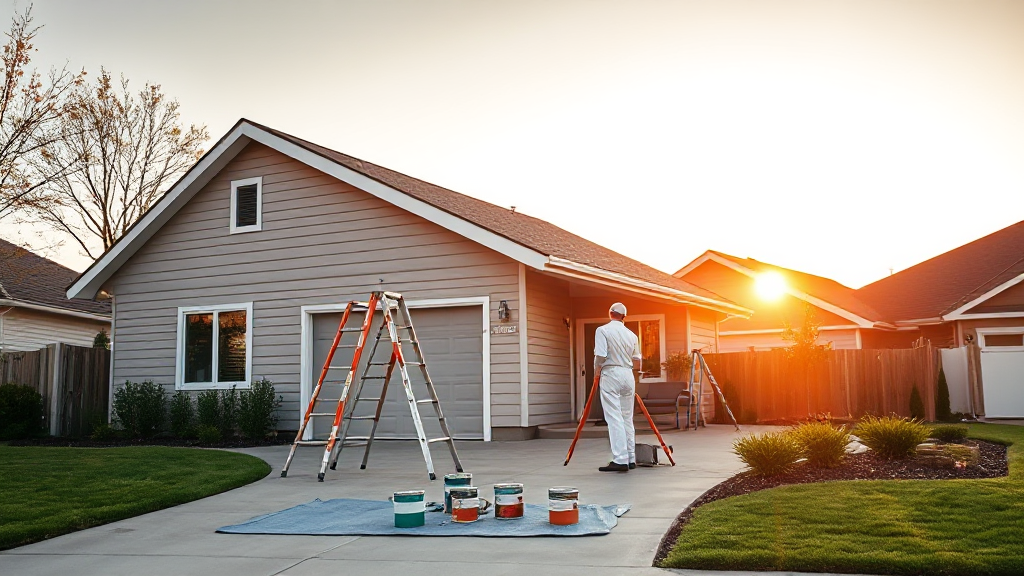
How Much to Paint a 1500 Sq Ft House Exterior: Real 2026 Price Ranges
If you’re trying to figure out how much to paint a 1500 sq ft house exterior, the honest answer is that most jobs land somewhere between $2,500 and $6,500. That’s a wide spread, and it’s wide for a reason. A single-story ranch with vinyl siding in a low-cost metro is a different animal from a two-story stucco house with wood rot in a coastal city. The number that matters is the one on the bid sitting in front of you, and this breakdown is meant to help you sanity-check it.
I’ve been through this twice in the last few years, once as a homeowner and once helping a family member compare bids. Both times the quotes varied by more than 40% for what sounded like the same scope of work. The difference was almost never the paint itself. It was prep, access, and how many coats the contractor actually planned to apply.
What Actually Drives the Cost of a 1500 Sq Ft Exterior Paint Job
When a painter gives you a price, they’re mentally adding up four buckets: labor, paint and materials, prep work, and equipment or access. Labor is usually the biggest slice, often 50% to 60% of the total. Paint is surprisingly small, usually 15% to 20%. Prep is the wild card that can double a quote. Equipment is small unless the house needs scaffolding or a lift.
Here’s roughly how a mid-range $4,500 job breaks down for a 1500 sq ft home with two coats and moderate prep:
Labor: $2,300 to $2,700. That covers masking, spraying or rolling, cutting in, cleanup, and a second trip for touch-ups. A crew of two typically finishes a house this size in three to five days if the weather cooperates.
Paint and materials: $600 to $900. A 1500 sq ft exterior usually needs 12 to 18 gallons of body paint, plus primer, trim paint, caulk, and tape. Quality exterior acrylic runs $40 to $80 per gallon in 2026. Cheap paint saves you a few hundred dollars now and costs you a repaint in four years instead of eight.
Prep: $400 to $1,500. Pressure washing, scraping loose paint, sanding, caulking gaps, filling nail holes, and priming bare wood. This is where bids diverge the most, because one contractor might spend two days prepping and another might spend half a day.
Equipment and access: $150 to $600. Ladders and basic sprayers are cheap to run. Scaffolding or a boom lift for a two-story section adds real money.
DIY vs. Hiring a Pro for a 1500 Sq Ft House
Doing it yourself can cut the bill to $800 to $1,500, mostly paint, primer, caulk, tape, brushes, rollers, and a sprayer rental. That sounds like a huge saving, and it is, but it comes with strings attached.
A 1500 sq ft exterior is roughly 1,400 to 1,900 sq ft of paintable surface once you account for trim, soffits, and doors. On a single-story house, a reasonably fit homeowner with a ladder can prep and paint it over two or three long weekends. On a two-story house with steep gables, you’re looking at heights where a fall is a serious injury, and that’s before you factor in the learning curve of spraying without leaving lap marks.
Professional crews also bring insurance. If someone drops a ladder through a window or spills paint on your driveway, that’s covered. If you do it yourself, it’s on you. And pro jobs usually come with a workmanship warranty of one to three years, which is worth something when a section starts peeling in eighteen months.
My honest take: DIY makes sense for a single-story ranch in decent condition if you have the time and don’t mind the work. For anything two stories, heavily weathered, or with lots of trim detail, hiring out is usually the smarter call even at double the price.
Siding Type Changes the Number More Than You’d Expect
The material on your walls determines how much prep, primer, and paint you need. Here’s how the same 1500 sq ft house shakes out across common siding types.
Vinyl siding is the cheapest to paint, generally $2,200 to $4,000. It’s smooth, takes paint well, and usually needs minimal prep beyond a good wash. The catch is that dark colors can warp vinyl in direct sun, so you may be limited in color choice.
Wood siding and cedar run $3,500 to $6,500. Wood drinks paint, so you’ll use more gallons, and it often needs scraping, priming, and caulking. If there’s rot, add $500 to $2,000 for repairs.
Stucco sits in the middle at $3,000 to $5,500. It’s durable but porous, so it usually needs a masonry primer and two finish coats. Hairline cracks need patching first.
Brick and masonry are the most expensive at $4,500 to $8,000 or more. Brick doesn’t technically need paint, but if you’re painting it, you’re committing to a lifetime of repainting. It requires specialized breathable coatings and a lot of labor.
Fiber cement board like HardiePlank lands around $3,200 to $5,800. It holds paint well and is dimensionally stable, but it’s heavy and the prep work is fussy.
How Region and Timing Move the Price
Where you live matters as much as what your house is made of. In 2026, a 1500 sq ft exterior repaint in a low-cost market like the rural South or Midwest might come in at $2,200 to $3,800. In a mid-cost metro like Dallas, Atlanta, or Phoenix, expect $3,000 to $5,000. In high-cost coastal markets like Seattle, Boston, or the Bay Area, $5,000 to $9,000 is normal because labor rates are higher and weather windows are shorter.
Seasonality plays a role too. Painters are busiest from late spring through early fall. Booking in winter, or in the shoulder months, can sometimes save you 10% to 15% because crews are hungry for work. Just make sure temperatures stay above 50°F for the paint you’re using, or the finish won’t cure properly.
House height is the other silent cost driver. A single-story 1500 sq ft house is straightforward. A two-story house with the same square footage has less roof area and more wall height, which means more ladder time, more risk, and often a higher labor rate.
How to Compare Bids and Spot Red Flags
When you have two or three quotes in hand, don’t just look at the bottom line. Ask each contractor what’s included in writing. A bid that’s $1,500 cheaper might be skipping the pressure wash, using one coat instead of two, or excluding trim and doors.
Get these specifics in every bid: number of coats on body, trim, and doors; whether pressure washing and caulking are included; what brand and line of paint they’re using; whether minor wood repair is covered; and what the warranty says. If a contractor won’t put it in writing, that’s your answer.
Red flags I’d watch for: a quote that’s dramatically lower than everyone else, usually a sign of one coat and no prep. A demand for full payment upfront, when a 30% to 50% deposit is standard. No local references or no proof of insurance. And vague language like “prep as needed” without a dollar cap, which can turn into a surprise change order halfway through the job.
A fair bid for a 1500 sq ft exterior in average condition, with two coats and proper prep, should fall in the $3,000 to $5,500 range in most of the country. If you’re well above or below that, ask why before you sign.
Frequently Asked Questions
Is it cheaper to paint a house myself or hire a pro?
DIY is cheaper on paper, usually $800 to $1,500 in materials versus $2,500 to $6,500 for a pro. But once you count your own time, equipment rental, and the risk of a bad finish or a fall, the gap narrows fast, especially on two-story homes.
How long does a 1500 sq ft exterior paint job take?
A professional crew of two usually finishes in three to five working days, weather permitting. DIY typically takes two to three weekends for a single-story house, longer if there’s significant scraping or repair.
Does a 1500 sq ft house need one coat or two?
Two coats on the body is the standard for a durable finish, especially when changing colors. One coat can work if you’re recoating the same color on well-prepped siding, but most manufacturers won’t honor their warranty on a single coat.
What’s the best time of year to paint a house exterior?
Late spring through early fall is ideal in most climates, with temperatures between 50°F and 85°F and low humidity. Painting in extreme heat causes the paint to dry too fast and can leave brush marks.